Welcome Back to School Clipart Pencil: Graphics for Crafts
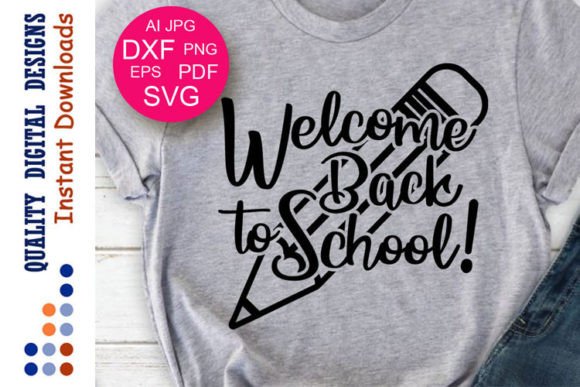
As a graphic designer who’s built brand identities for over a dozen handmade businesses—from Etsy shops launching back-to-school printable kits to local tutoring centers refreshing their seasonal marketing—I opened Welcome Back to School Clipart Pencil expecting charm, not clutter. What I found was a tightly composed, hand-drawn pencil illustration with subtle texture, warm line weight, and intentional imperfection—exactly the kind of graphic design asset that bridges nostalgia and modern clarity.
A First Impression That Sets the Tone
The pencil feels like it belongs in a sketchbook—not a stock library. Its gentle taper, soft graphite tip, and faint woodgrain suggestion evoke approachability and authenticity. It doesn’t scream “school,” but whispers “learning begins here.” That nuance matters. For a client launching a boutique line of eco-friendly student journals or a small business offering personalized first-day-of-school photo props, this isn’t just clipart—it’s a mood anchor. It supports storytelling before a single word is read.
Where It Shines in Real Client Projects
Welcome Back to School Clipart Pencil performs exceptionally well across tactile and digital touchpoints. In packaging design, it scales beautifully on kraft paper labels for pencil sets or notebook bundles—especially when paired with muted earth tones or crisp white backgrounds. As a sticker design or product mockup accent, its clean vector outlines (found in the SVG, AI, and EPS files) hold sharpness at any size. On t-shirts and tote bags, the PNG version with transparent background layers smoothly over distressed textures or watercolor washes—ideal for sublimation design or DTG printing.
For social media graphics, it adds warmth to Instagram carousels announcing classroom resources or Canva templates for teacher planners. In editorial design, it functions as a decorative divider between sections of a printable back-to-school checklist or a blog post about mindful learning transitions. And for Cricut users building custom bulletin board kits or laminated reward charts, the DXF and SVG files cut precisely—no jagged edges, no alignment headaches.
Strategic Placement: Hero, Accent, or Collection Anchor?
This pencil excels in three practical roles: as a hero graphic in hero banners for landing pages or email headers; as a decorative accent along borders of printable worksheets or planner inserts; and as a unifying element across a design bundle—think matching stickers, labels, and digital badges for a cohesive handmade business launch.
It strengthens brand identity when used consistently—not as a logo (it lacks the structural neutrality needed for primary marks), but as a supporting icon reinforcing educational warmth and creative intention. Paired with a friendly sans serif like Nunito or a gentle script font, it enhances visual hierarchy without competing for attention.
Where Caution Is Warranted
Because of its expressive line work and organic feel, Welcome Back to School Clipart Pencil loses definition below 24px—so avoid using it as a tiny favicon or app icon. It also recedes on busy or high-contrast backgrounds (e.g., neon gradients or dense patterned overlays), where its emotional resonance gets visually drowned. In minimalist corporate branding or healthcare-adjacent education platforms, its handmade character may clash with expectations of clinical precision.
Crucially, it does not replace thoughtful logo design. Its strength lies in thematic reinforcement—not standalone authority. Use it to soften, humanize, and personalize—not to stand in for strategic brand architecture.
Designer Notes You Can’t Skip Before Client Use
Before dropping Welcome Back to School Clipart Pencil into a live project, run these checks:
- Test it in black and white—verify legibility on monochrome printouts or embroidery digitizing.
- Preview on both light and dark backgrounds—the PNG transparency works cleanly, but always confirm edge rendering in your final export.
- Scale it up and down—confirm crispness in SVG at 500% zoom and readability at 72dpi web size.
- Place it on real mockups—not just flat previews. Try it on a textured mug, a linen tote, or a matte-finish sticker sheet.
- Check print quality—run a test print on your target paper stock, especially if using the JPG or PDF for physical handouts.
- Inspect vector editability—open the AI or SVG file to confirm grouped paths are logically layered and editable (no flattened raster effects).
- Compare with typography—see how it pairs with serif, sans serif, script, and display fonts in your brand palette. Its warmth balances best with open, airy typefaces.
- Verify commercial license—this is a commercial design asset, but always reconfirm usage rights for your client’s distribution model (e.g., resale on print-on-demand, inclusion in a paid Canva template, or use in an Etsy product listing).
Final Verdict: A Thoughtful Asset, Not a Shortcut
Welcome Back to School Clipart Pencil isn’t filler—it’s a deliberate visual cue. It elevates printable design from functional to memorable, adds sincerity to marketing visuals, and quietly reinforces trust in a small business branding effort. For designers serving creative marketplaces, crafters building themed collections, or educators launching digital products, it delivers consistent tone, format flexibility, and commercial readiness.
Its value isn’t in how many files it ships with—though the inclusion of – SVG, Ai, EPS, PDF, JPG, PNG, DXF files gives serious workflow flexibility—but in how thoughtfully it occupies space. It doesn’t shout. It invites. And in today’s oversaturated digital landscape, that kind of quiet confidence is rare, useful, and deeply professional.